
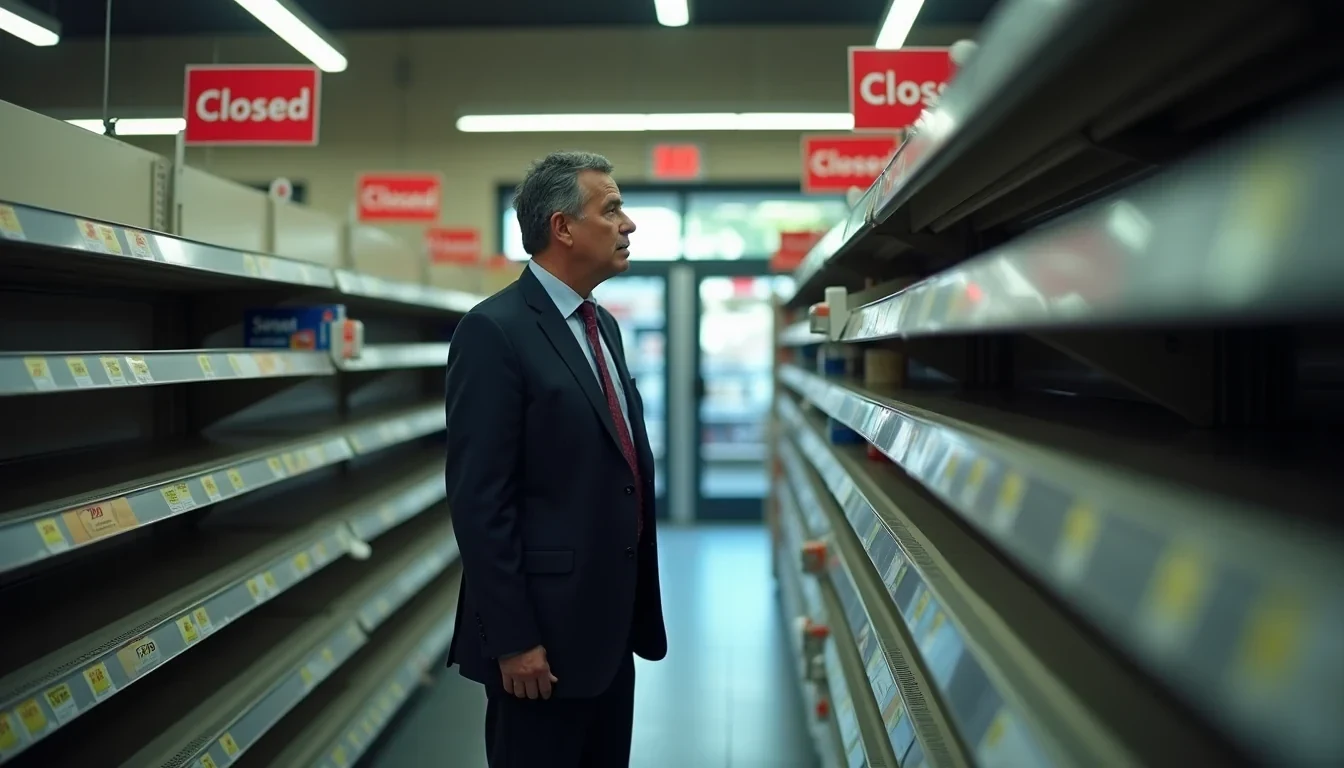
Pick n Pay’s brand sales fell in FY26, and the company cited that decline in its annual report as evidence of progress. This reverses the usual order of things. Retailers normally grow their way out of trouble by opening stores, pushing turnover, and chasing scale. Pick n Pay did the opposite. It closed locations, converted others to its Boxer format, and accepted a smaller top line in exchange for something it judged more valuable: stores that do not leak cash.
The metric that exposes the damage
Pick n Pay used a tool called four-wall profitability. It asks a simple question about each outlet: Does the store, on its own, generate enough gross profit to cover its direct costs? These include labor, rent, electricity, stock shrinkage or spoilage, and local delivery runs. Head office costs, central marketing, and the CEO’s salary do not enter the calculation. The test is whether the four walls of that specific shop produce a positive number.
Most retailers do not look at stores this way. They pool everything, spread head office costs across the network, and report group margins. A store that loses R2 million a year becomes invisible, its losses averaged against a profitable cousin across town. Pick n Pay stopped doing that. It looked at each box individually and found some that had no business staying open.
Why the numbers looked worse and the business looked better
The closures and conversions pushed FY26 brand sales downward. That headline figure caught attention. Less noticed was the like-for-like improvement in the company-owned stores that remained. The retained outlets performed better once they stopped carrying the weight.
Owners often miss this mechanism. An unprofitable store does not merely fail to contribute; it actively subtracts. The cash it consumes has to come from somewhere. In a retail group, that somewhere is the profitable stores. They generate surplus that then flows to cover rent on a bad location, excess staff on a quiet floor, or shrinkage in a shop where controls never worked. The group looks larger than it is, and strong stores effectively finance weak ones that are not turning around; they are just persisting.
Pick n Pay’s decision to cut them loose meant accepting a smaller reported revenue number. The alternative was to keep reporting growth while profitable stores subsidised failure.
The psychology that keeps bad stores alive
Owners typically know when a store is losing money because the data is available. They need permission to act on it, but that permission faces several obstacles.
Closure feels like retreat. Competitors might notice, staff will lose jobs, and the owner will carry that burden. The local community loses a presence. There is also the scale argument: the belief that a larger network buys better terms with suppliers, impresses investors, or simply looks more substantial in annual reports. Some owners hold on because the store was an early success, or because they remember when it worked, or because they are convinced that with one more push, one more manager, or one more marketing campaign, the trend will reverse.
None of these are financial arguments. They are emotional and reputational, and they are expensive. Pick n Pay’s turnaround required setting them aside. The company had to treat each store as a capital allocation decision, not a narrative about momentum.
What strategic shrinkage actually frees up
Removing structurally unprofitable stores does more than stop the bleeding; it redirects resources. Management attention, which is finite, moves from firefighting in problem locations to running the stores that work. Capital tied up in stock for a slow-turning shop becomes available elsewhere. The remaining network can be refined, reset, and operated with tighter discipline.
Pick n Pay also converted some underperforming stores to Boxer, its lower-cost format. This is not closure in disguise. It recognizes that the location might work with a different cost structure, product mix, and customer proposition. The four-wall test still applies. A Boxer conversion only makes sense if the new format can cover its own direct costs.
The harder call that stronger operators make
One version of retail strategy treats store count as the score: more doors, more revenue, more geographic coverage. This version is easy to explain and easy to photograph. It is also how companies drift into managed decline, propping up marginal locations until the whole network weakens.
Pick n Pay’s FY26 results reject that version. The company chose a smaller, more profitable footprint over a larger, weaker one. The headline revenue number fell, but the underlying business improved. That trade-off is available to any operator with the discipline to look at individual store economics and the willingness to act on what they show. Most do not take it. The ones who do are not retreating; they are choosing which ground is actually worth holding.