Nike spent years telling investors that the future was direct. Own the customer, own the data, own the margin. By fiscal 2026, the company expects wholesale revenue to climb 6% while Nike Direct contracts 6% and Nike Brand Digital drops 12%. This is a public admission that the math of distribution does not bend to brand ambition.
What Nike Chased in the Direct Pivot
The DTC push made sense on a spreadsheet. A shoe sold through Nike.com or a company store carried gross margins of roughly 60-70%, against 30-40% when Foot Locker or JD Sports took their cut. Nike also kept the customer relationship, the purchase history, the email address, and the app download. Under CEO John Donahoe, the company accelerated this strategy, pulling back from undifferentiated wholesale accounts and pouring capital into digital platforms like SNKRS and the Nike membership ecosystem.
The bet was that consumers would come to Nike rather than waiting to encounter it. The company would build the destination, control the experience, and capture the full markup. The plan assumed the cost of building that destination and the customers who would never arrive at it were acceptable losses.
Where the Direct Model Bled
Higher gross margin per unit means little if the unit economics underneath erode it. Direct channels force the manufacturer to become a retailer. This means bearing the full cost of customer acquisition through paid search and social advertising, operating warehouses for individual pick-and-pack fulfillment, absorbing shipping and returns, and managing inventory risk without the buffer of large wholesale orders. A bulk shipment to Dick’s Sporting Goods is operationally simpler than ten thousand single-pair deliveries to scattered addresses.
Nike discovered what every brand leaning into DTC eventually confronts. The margin looks fat until you subtract the marketing spend required to replace the foot traffic that Foot Locker provides for free. It looks robust until you count the returns processing, the dead stock in regional warehouses, and the customers who browse the app but buy nothing because they cannot try the shoe on. The company was paying to recreate infrastructure that wholesale partners already operated at scale.
What Wholesale Actually Delivers
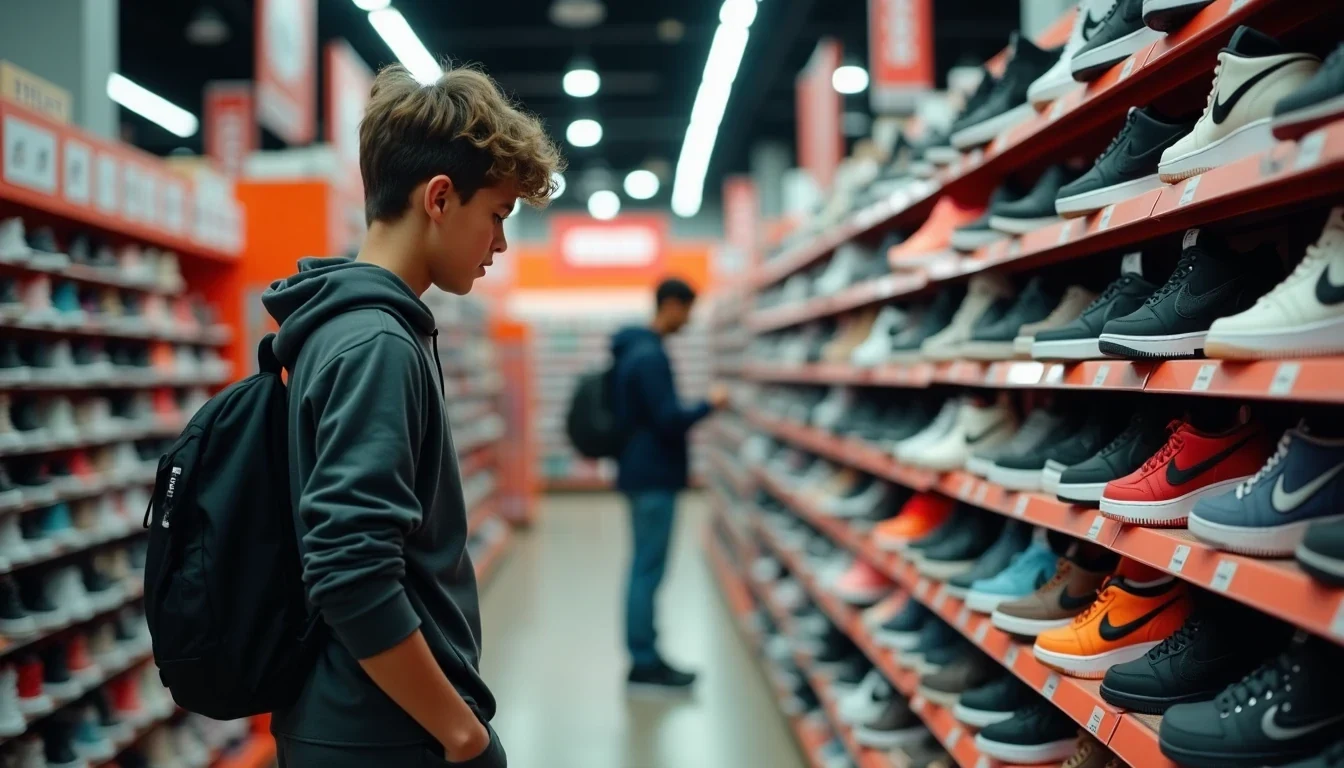
The retail partner model offers three things that are difficult to price but easy to observe in their absence. First, discovery: a teenager walking into a mall store to look at Adidas sees a Nike display, tries both, and decides on the spot. That serendipity does not happen on a brand-owned app where the user has already self-selected. Second, convenience: immediate purchase, immediate possession, and easy return to a local location. Third, physical presence: thousands of storefronts in communities where a Nike-owned store would never justify the rent.
Foot Locker, JD Sports, and Dick’s Sporting Goods also bring their own marketing, local knowledge, and credit with regional consumers. Nike’s brand is strong enough that it does not need wholesale partners for credibility. It needs them for reach. The customer who will never download SNKRS still buys sneakers.
The Channel Economics Reconstructed
| Channel | Gross Margin | Customer Acquisition | Inventory Risk | Market Reach |
|---|---|---|---|---|
| Nike Direct / Digital | 60-70% | High (paid digital, app investment) | Full burden on Nike | Limited to existing brand seekers |
| Wholesale | 30-40% | Low (partner-funded discovery) | Shifted to retailer | Broad, including passive shoppers |
| Marketplace (Amazon, Zalando) | Variable, often compressed | Moderate (platform fees) | Shared or platform-handled | Very broad, price-sensitive |
The table makes the trade visible. Direct sales yield more per transaction but cost more to generate and fulfill. Wholesale yields less per transaction but costs almost nothing to acquire and exposes the product to buyers who were not searching for it. The strategic error is treating channel choice as a morality play rather than an allocation problem. Nike fell into this briefly, framing DTC as modern and wholesale as legacy. The fiscal 2026 projections show the company climbing out.
What Was Knowable Before the Reversal
None of this was unforeseeable. The tension between margin and reach is ancient in consumer goods. Procter & Gamble does not sell detergent only from P&G stores for the same reason Nike cannot sell sneakers only from Nike apps. Some products benefit from destination branding. Others, especially those with fit and feel components, benefit from ubiquity. Athletic footwear sits awkwardly between the two. A collector will hunt a limited drop anywhere. A parent buying a child’s school shoe will buy what is available where they already shop.
Nike’s own history contained the warning. The company’s growth through the 1980s and 1990s was built on wholesale expansion, on becoming unavoidable in every sporting goods store and department store in America. The DTC pivot assumed that digital had changed the game enough to make that infrastructure obsolete. It underestimated how much of Nike’s volume came from casual purchasers who do not think of themselves as Nike customers until they see the swoosh while buying something else.
The Mechanism for Other Operators
For a founder or operator reading this, the lesson is not that wholesale is superior to direct. It is that channel decisions must be optimized for total profit dollars and total customer access, not for channel-specific vanity metrics. A 70% gross margin on a small base of committed buyers can deliver fewer actual rands or dollars than a 35% margin on a broad base of incidental ones.
The inventory burden alone deserves attention. Wholesale partners place orders, take delivery, and live with the consequences if the product sits. This is not merely risk transfer; it is working capital efficiency. The manufacturer gets paid faster, produces at more predictable scale, and avoids the operational complexity of retail returns.
Nike’s reversal also carries a partnership signal. After years of tension, reduced allocations, and strained relationships, the company is returning to the table with key accounts. This has value beyond the immediate revenue. Retailers with limited shelf space reward cooperative suppliers with placement, staff training, and promotional support. A brand that treats wholesale as a residual channel gets residual attention.
The Unresolved Question
Nike will now attempt what it calls a “consumer direct offense” modified by wholesale reality, an omnichannel balance that preserves digital investment while rebuilding physical reach. Whether this is stable, or merely a swing of the pendulum before another DTC push, depends on whether the company can hold two ideas at once: direct relationships for the engaged, and wholesale reach for the masses. Most brands fail at this integration, defaulting to whichever channel the current leadership favors. Nike has the scale to attempt both. Whether it has the organizational patience is the bet investors are now making.