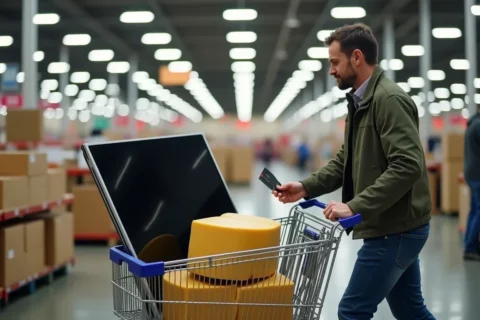
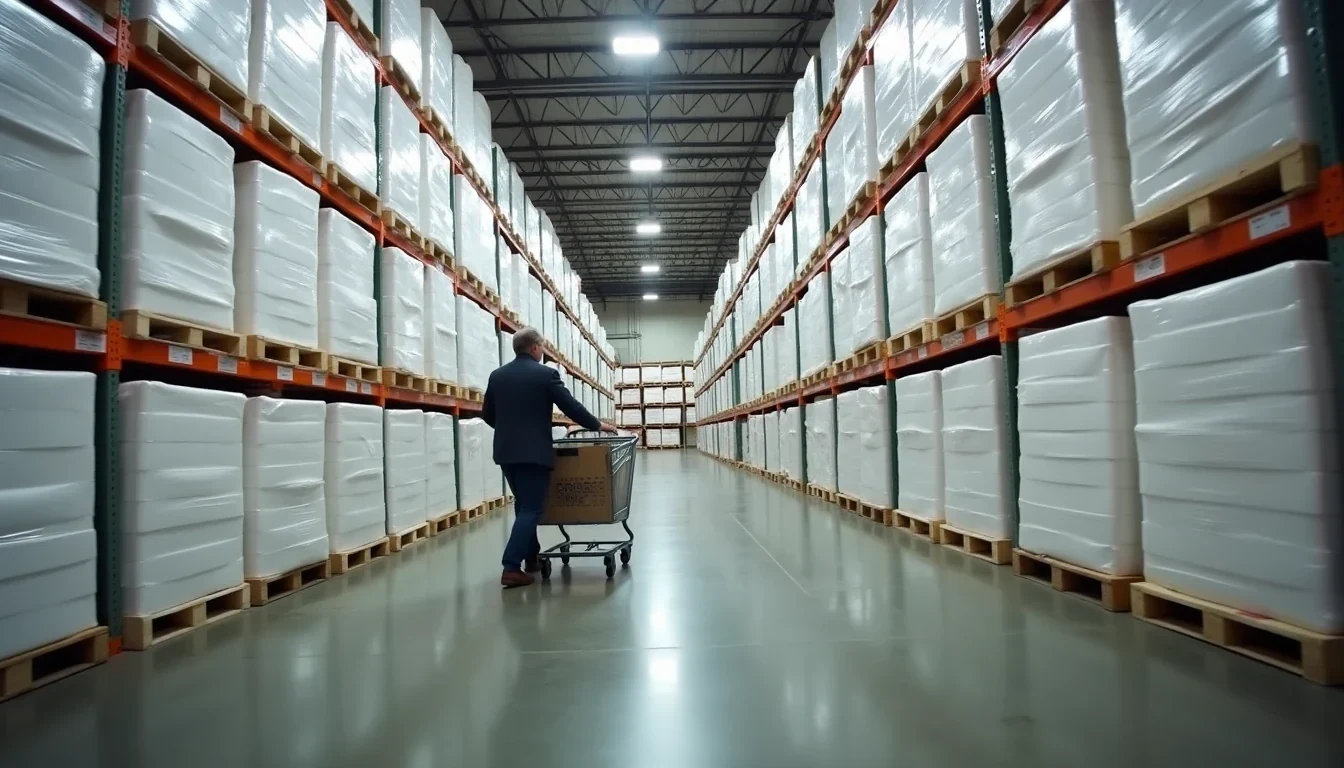
Costco wins not by offering shoppers everything, but by refusing to carry most things. This refusal allows it to squeeze suppliers, simplify stores, and move inventory so fast that cash doesn’t sit around gathering dust. The model appears plain until you compare it to a supermarket carrying 30,000 to 60,000 SKUs and realize the real product is discipline, not variety.
Costco’s global assortment is about 3,700 SKUs. Aldi runs with an even tighter core, around 1,400. A conventional grocer aims to be the place where everyone can find everything. Costco tries to be the place where a narrow list of items are cheap, trusted, and almost always in stock. This is not restraint for its own sake; it is a deliberate commercial trade.
What Costco is actually selling
The obvious thing Costco sells is bulk toothpaste, appliances, and rotisserie chickens. The less obvious thing is certainty. If an item makes it to the floor, it has already cleared a hard filter on volume, quality, and margin. This is why the store feels edited rather than stocked. The company is not trying to maximize shelf variety. It is trying to concentrate demand into fewer lines so each line moves faster.
This concentration changes the economics. When volume is focused on a small number of items, purchasing power rises. Suppliers see bigger orders, Costco gets better terms, and the savings can be passed on as lower prices. The private label side, especially Kirkland Signature, benefits from the same logic. Fewer choices make it easier to scale up a smaller set of products and maintain tighter quality because the business isn’t juggling a long tail of oddballs.
The customer trade is equally clear. Shoppers give up endless choice. In return, they get lower prices, less decision fatigue, and less of the slow panic that comes from standing in front of 14 nearly identical bottles. Barry Schwartz’s “paradox of choice” captured the psychology neatly, but the retail version is simpler. Too much choice makes people hesitate. A curated range gets them to the checkout.
Why wide ranges get expensive fast
Most businesses add products the way a cluttered desk gathers paper, one item at a time, each one justifiable on its own. A new size, a new color, a new variant, a seasonal line, a special order item. Each addition looks like incremental revenue. Few operators price in the full mess that comes with it.
Every SKU creates work in forecasting, buying, receiving, shelving, training, marketing, and quality control. It also creates working capital demand, which is the cash tied up in stock before the stock turns back into cash. If inventory sits, the business funds it. If inventory moves slowly, the business funds it longer. Carrying costs on inventory can run roughly 15% to 35% of value a year once you include warehousing, insurance, obsolescence, damage, and the cost of capital.
The trap is that complexity compounds. One more item does not add one more unit of hassle; it adds variation across the whole system. Forecasting becomes noisier. Supplier management becomes heavier. Shelf planning becomes more awkward. Errors rise in picking, stocking, and ordering. The result is familiar in retail and B2B alike: an organization that looks busier while becoming less efficient.
A narrow range cuts across that entire pile of hidden costs. It reduces the number of supplier relationships that need attention, makes demand patterns easier to read, lowers waste, and improves inventory turns. Costco’s turnover is often around 12 times a year, meaning products do not linger. They pass through the system quickly, and quick turnover keeps capital free and margins honest.
Where the money goes
The main financial win is not mystical; it is mechanical. Faster turns mean less cash trapped in stock. Better forecasting means fewer markdowns. Fewer suppliers mean less administrative drag. Better volume concentration means stronger pricing. Put those together, and you get a business that can sell cheaply without becoming weak.
This is why narrow assortment and membership retail fit each other so well. Costco collects a fee upfront, then uses a lean operating model to keep product prices aggressive. The fee cushions the economics, but the assortment strategy does the heavy lifting. It lets the company buy deeper, store simpler, and sell faster. That is a cleaner engine than one built on endless choice and thin replenishment discipline.
The “treasure hunt” layer adds another twist. The non-core items rotate, so the limited range does not feel sterile; it feels scarce. Shoppers know the item they saw this week may not be there next week, which creates impulse buying and repeat visits. Scarcity becomes part of the merchandising, and the low-SKU model gives Costco room to do it without turning the store into a warehouse of leftovers.
What was knowable when this was built
None of this required hindsight genius. Retailers have always known that assortment breadth can become a tax. The mistake is usually emotional, not intellectual. A manager sees a customer request and assumes the answer is to add a product. A buyer sees another slot on the shelf and assumes it can pay its way. The spreadsheet rarely reflects the full burden.
The question that should be asked before adding anything is blunt: Does this SKU earn enough gross margin to cover its share of inventory holding, supplier management, merchandising, shrinkage, and forecasting error? If the answer is not explicit, the business is probably mistaking activity for profit. Activity feels like progress. Inventory turns tell the truth.
Costco and Aldi show that the opposite instinct can be stronger. Keep the range narrow. Buy in depth. Make the store easier to run than the competition’s. Let the customer feel they are getting a filtered selection rather than an unlimited mess. That discipline is why the model holds up in a low-margin business where small operational advantages become large financial ones.
What operators should steal from it
The lesson is not “carry fewer products” as a universal rule. Some businesses need range. Some categories reward breadth. But every operator should know the real cost of one more option before adding it. If a product line needs extra suppliers, extra training, extra shelf choreography, and extra cash to sit on the floor, the revenue it brings must be better than it first appears.
The useful habit is to treat assortment like capital allocation. Every slot is a bet. Every new SKU competes with the items already earning their place. If the new line does not increase volume enough to justify the added complexity, it is not expansion; it is clutter with a gross margin attached.
Costco’s real advantage is not that it sells less. It is that it knows exactly why it sells less, and the rest of the business is built to cash that decision in.