
Shoprite transferred more than R1 billion in straight discounts to shoppers in the first half of its 2025 financial year. That figure is not a marketing claim; it is the measurable output of a machine built to make low prices profitable rather than desperate.
The retailer reported 14,400 individual products priced lower in December 2025 than twelve months earlier. Sales climbed 7.2% to R136.8 billion. Customer visits rose 5.6%. Profit still grew 7.7%. The arithmetic looks wrong at first glance: how do you cut prices, pull more people through the door, and make more money while gross margins compress? Shoprite discounts because of its operations, not despite them.
The Scale That Buys Cheaper
Shoprite’s purchasing power rests on a simple commercial reality. When you control thousands of stores across multiple formats, from the flagship Shoprite and Checkers banners down to Usave, you become impossible for a Fast-Moving Consumer Goods supplier to replace. Manufacturers need shelf space more than the shelf needs any single manufacturer.
That bargaining power translates into lower per-unit costs, bulk arrangements, extended payment terms, and promotional support that smaller chains cannot match. Shoprite then passes those savings through rather than banking them as margin. The R1 billion figure represents that pass-through in action.
Private label expansion sharpens the advantage further. By commissioning production directly under banners like Checkers Housebrand and Ritebrand, Shoprite removes the supplier markup entirely. The product reaches the shelf at a cost basis its branded competitors cannot replicate, and the retailer still captures a healthy margin at a retail price that undercuts them.
Density as a Cost Structure
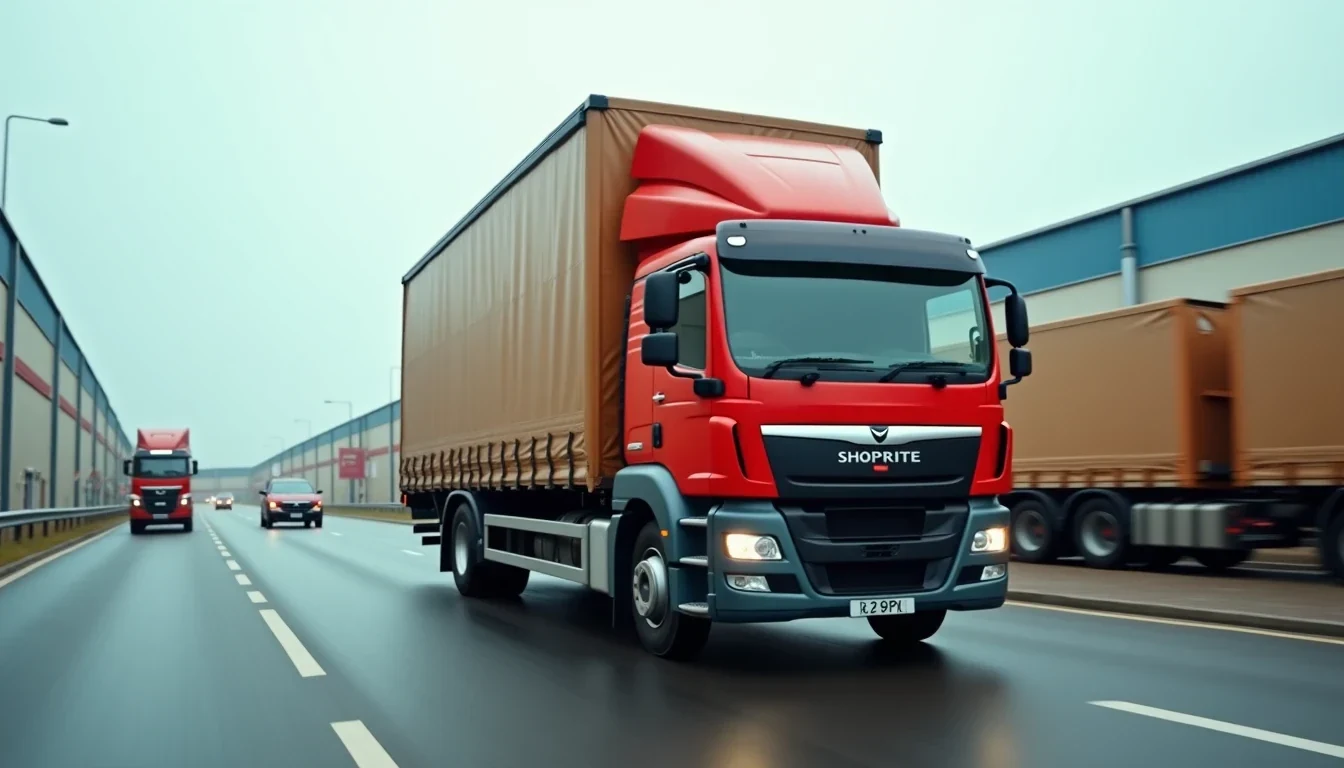
A discount is only as good as the logistics behind it. Shoprite operates a distribution network dense enough to change the unit economics of getting goods from supplier to shelf.
Strategically placed distribution centers serve tight geographical clusters of stores. Delivery routes are short enough to permit frequent, smaller drops rather than bulk shipments that tie up working capital in backroom inventory. Vehicles run fuller for more of their operating hours through backhauling, collecting goods from suppliers on return journeys rather than running empty.
The density also protects product value. Fresh produce moves through the system fast enough to limit spoilage. Write-downs shrink. The cost of a discounted tomato is not just the procurement price; it is the procurement price plus what you lost to rot, plus the warehouse space you paid for while waiting to move it. Shoprite’s network compresses all three.
Keeping the Shelf Full When Demand Spikes
Aggressive pricing draws foot traffic, but foot traffic becomes worthless if the promoted item is gone when the shopper arrives. Shoprite’s stock availability is itself a competitive weapon.
Real-time inventory visibility across stores and distribution centers allows rapid response to demand surges. Forecasting models, fed by historical sales patterns and promotional calendars, predict which products will move and where. Cross-docking at distribution centers keeps fast-moving promotional goods from sitting in storage. The time from receiving to dispatch shrinks, and the probability of an empty shelf at 11 a.m. on a Saturday drops with it.
The 5.6% growth in customer visits only converts to the 7.2% sales growth because those visitors found what they came for. An out-of-stock is a double loss: the immediate forgone sale and the erosion of trust that brings the customer back next time.
Where the Margin Actually Lives
Discounting funded by operational excellence still requires rigorous cost control everywhere else. Shoprite runs a loyalty programme called Xtra Savings that does more than drive repeat visits. It generates granular data on purchasing patterns, which informs targeted promotions, optimal product ranging, and shelf-space decisions that maximise return per square metre.
Energy costs are attacked directly. LED lighting, optimised refrigeration systems, and smart building management reduce utility bills across a store network where every basis point counts. Labour scheduling is tied to real-time traffic data rather than rota habit, matching staffing to demand without overhang.
Supplier negotiations extend beyond the goods on shelf. Landlords, utility providers, and service contractors all face a retailer with the scale to demand competitive rates. None of these savings appear on the price tag. They appear in the gap between what Shoprite pays to operate and what it can afford to charge while still clearing a profit.
The Self-Funding Engine
The full mechanism becomes visible only when the pieces run together. Purchasing scale lowers input costs. Distribution density lowers logistics costs. Stock availability converts traffic into sales. Data and cost control protect margin everywhere else. The result is a price cut that does not bleed the business but feeds it.
The R1 billion in customer savings generated the 5.6% visit growth, which drove the 7.2% sales growth to R136.8 billion, which still yielded 7.7% profit growth despite gross margin pressure. Each turn of the cycle reinforces the next. More volume strengthens purchasing power, more density justifies more distribution investment, and more data sharpens more decisions.
Price cutting without operational backing is a race to insolvency: you buy temporary market share with permanent margin destruction. Shoprite’s discounts are structurally profitable because the cost base was built to accommodate them. The savings are not a tactic; they are the exhaust of an engine running hot.
The uncomfortable question for competitors is whether the gap can be closed. Operational density on this scale is not bought overnight. It is accumulated through decades of store placement, distribution investment, supplier relationship development, and incremental efficiency gains. A rival could match a promotional price for a week. Matching the cost structure that makes that price sustainable is a different order of problem entirely.